
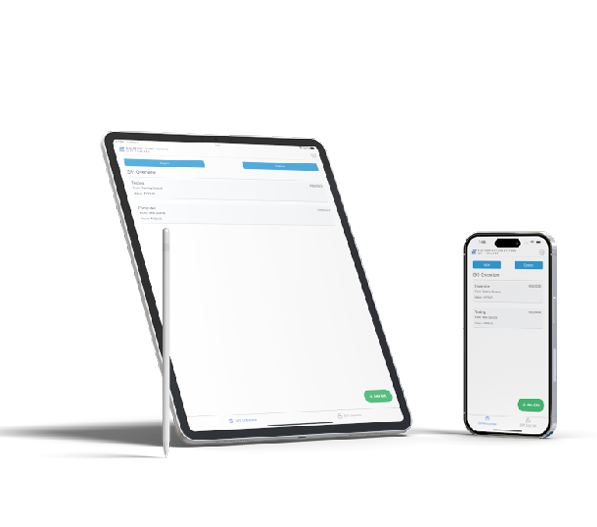
Move Form 700 Filing Online — for Filers, Officials, and the Public
Every year, thousands of California public officials and designated employees must file the FPPC Form 700 Statement of Economic Interests. For filing officers, managing that process on paper — or on a legacy system — means chasing signatures, tracking down late filers, hand-redacting addresses, and answering the same questions every spring.
Electronic filing changes that. With eFile, filers complete Form 700 in a guided, Turbo Tax-like experience from any device. Filing officers assign filings, send automated reminders, review submissions, and publish redacted public copies from a single unified portal. The public gets searchable, always-available access to disclosures — which is the point of the Political Reform Act in the first place.
eFile is developed and supported in California by Electronic Filing Systems, a California-certified small business, and is SOC 2 Type II certified — meeting the highest standards for data security, availability, and privacy.
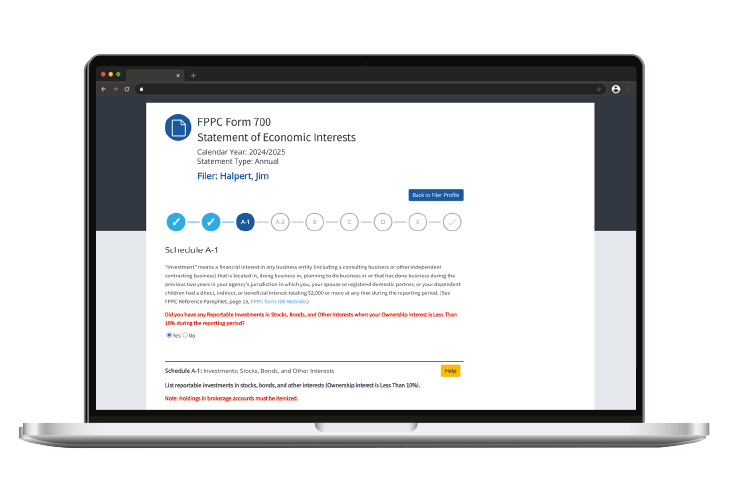
How eFile helps
A new experience with Form 700. Easier. Faster. Better.
- Unified portal for filers, filing officials, and the public.
- Intuitive, modern, mobile-friendly guided filing experience.
- Automated assignment, notification, and reminder system.
- Public copies are automatically redacted; scanned paper filings can be redacted with built-in PDF redaction.
- Built-in Conflict of Interest Code management.
- Free iOS and Android gift tracker app for Schedule D gifts.
Why Agencies Switch to Electronic Filing
Late and incomplete filings are the biggest compliance headache for filing officers. eFile's automated assignment and reminder system notifies every filer of upcoming deadlines — annual statements due April 1, assuming-office and leaving-office statements due within 30 days — and gives filing officers a real-time dashboard of who has filed and who hasn't.
And because eFile includes built-in Conflict of Interest Code management, your designated positions, disclosure categories, and filer assignments stay in sync — no more reconciling spreadsheets against your code every filing season.
FPPC Certification: Required for Every Local Filing System
A local agency can't simply switch on electronic filing. Under Government Code Section 87500.2 and FPPC Regulation 18756, every local electronic filing system for the Statement of Economic Interests must be approved and certified by the FPPC before filers can use it. The agency submits an electronic filing application to the FPPC together with its current conflict of interest code and a one-time $1,000 certification fee, and the FPPC reviews the system for compliance before issuing its approval.
The technical bar is real: the law requires secure authentication, encryption in transit and at rest, enterprise-grade firewalls, backup and disaster recovery capability, and the ability to completely redact information from any internet posting. eFile was built to these requirements from the ground up — and its SOC 2 Type II certification goes well beyond them.
Certification is issued to each agency, so every new eFile customer goes through the FPPC approval step. Our team prepares the application materials with you, and because the FPPC has certified many eFile-based systems before, the review is a well-trodden path — it's the main variable in the 2-to-5-week rollout timeline.
Switching from a Legacy Vendor? Your Data Comes With You.
Most agencies don't start from paper — they transition from a legacy platform such as NetFile or Granicus, and we have deep experience with those migrations. Filer and position rosters, assignment histories, and years of historical filings all come across, so your public record stays complete and searchable from day one.
Migrations are planned around your filing calendar so filers never miss a deadline, and they're backed by unlimited, California-based training for filing officers and filers. Combined with FPPC certification of your system, a typical transition takes 2 to 5 weeks.
Enterprise features
Built with support for large agencies and counties.
- Single Sign-On (SSO): filers and officials sign in with your agency's existing identity provider — no separate passwords to manage.
- Multi-Agency Support: host multiple agencies, departments, and special districts in one system, each with its own filing officers and filer rosters.
- Real role-based access control: fine-grained RBAC so departmental admins see exactly what they need — and nothing more.
- Email integration: notifications and reminders sent through your agency's email domain, so messages land in inboxes instead of spam folders.
- Web domain integration: eFile runs on a subdomain of your agency's own domain — for example, https://efile.yourcounty.gov — so filers and the public always know they're on an official site.
- Plus multi-factor authentication, full audit logging, and SOC 2 Type II certified hosting on the AWS Cloud.
Frequently Asked Questions
Can Form 700 be filed electronically in California?
Yes. California agencies may adopt an electronic filing system for the Statement of Economic Interests (Form 700). With eFile, filers complete and submit Form 700 online — from any device — and filing officers manage assignments, reminders, amendments, and public disclosure in one portal.
Is an electronically filed Form 700 legally valid?
Yes. Government Code Section 87500.2 authorizes local agencies to accept Statements of Economic Interests electronically through an FPPC-approved system, and electronic filings carry the same legal weight as paper originals. eFile maintains a complete audit trail for every filing.
Does the FPPC have to approve our electronic filing system?
Yes. Under Government Code Section 87500.2 and FPPC Regulation 18756, each local agency's Form 700 electronic filing system must be certified by the FPPC. The agency files an electronic filing application with its current conflict of interest code and a $1,000 certification fee. eFile prepares the application materials with you, and FPPC certification of your system is the main variable in the rollout timeline.
How does eFile protect filers' private information?
The public versions of electronic filings are automatically redacted, and uploaded scanned paper filings can be redacted with eFile's built-in PDF redaction tools before they are published.
Can we still accept paper Form 700 filings after switching to eFile?
Yes. Scanned paper filings can be uploaded into eFile, redacted with the built-in PDF redaction tool, and published alongside electronic filings, so your agency keeps a single, complete record.
How long does it take to roll out Form 700 electronic filing?
Depending on the number of filers in your agency and whether or not you need to migrate data from a legacy vendor, you can be up and running within 2 to 5 weeks — driven primarily by the time it takes the FPPC to certify your system. eFile imports your filer and position lists, mirrors your conflict of interest code, and our California-based team provides unlimited training for filing officers and filers.