
Form 700: California's Statement of Economic Interests
Form 700, the Statement of Economic Interests, is the disclosure form California public officials file to report their personal financial interests — investments, real property, income, gifts, and travel payments. It exists so the public can see whether an official's financial interests could conflict with their public duties. The form is prescribed by the Fair Political Practices Commission (FPPC) under the Political Reform Act of 1974, and filings are public records.
Two groups of people file Form 700. Officials listed in Government Code Section 87200 — mayors, city council members, county supervisors, planning commissioners, city managers, city attorneys, county counsels, treasurers, and public officials who manage public investments — file with full disclosure. In addition, every state and local agency adopts a conflict of interest code that designates positions whose duties involve decision-making that could affect personal financial interests; employees and consultants in those designated positions file according to the disclosure categories their agency assigns.
Form 700 is filed when an official assumes office, every year while serving (the annual statement), and when leaving office. Candidates for Office file as well.
What the Schedules Cover
Form 700 is organized into schedules, and filers complete only the ones that apply to their disclosure category:
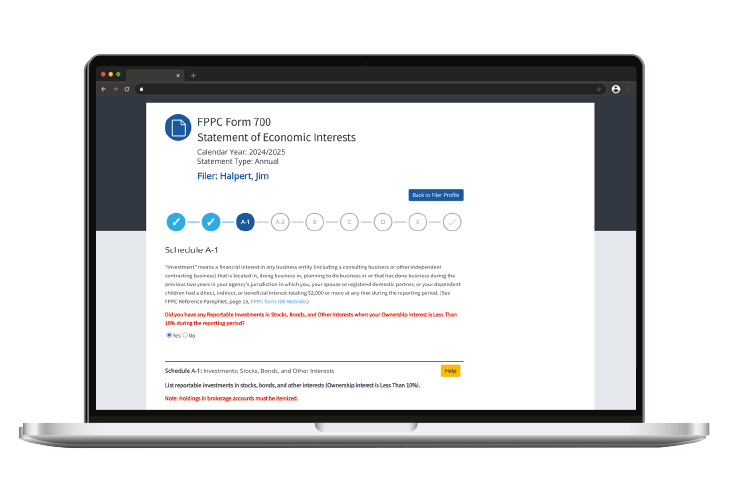
- Schedule A-1 and A-2: Investments — stocks and other interests in business entities, including business entities owned through a trust. In eFile, investments can be uploaded from Excel instead of entered one by one.
- Schedule B: Interests in real property, such as rental property within the agency's jurisdiction.
- Schedule C: Income, loans, and business positions.
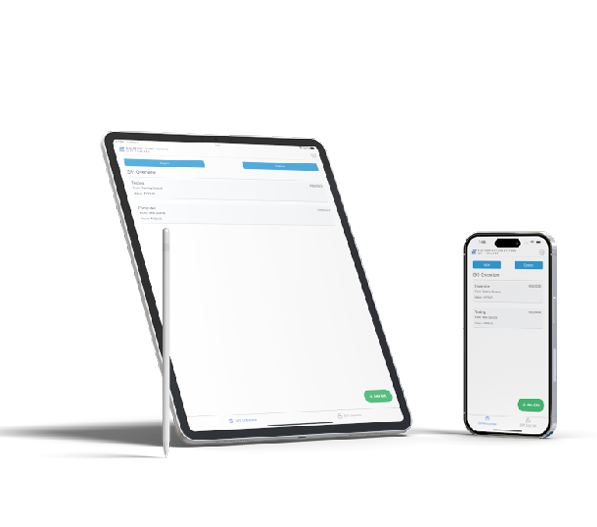
- Schedule D: Gifts — reportable when gifts from a single source total $50 or more in the reporting period. For 2025–2026, the gift limit is $630 per source per calendar year. Tracking gifts through the year is the part filers most often struggle with — that's why Electronic Filing Systems offers a free gift tracker app for iOS and Android that exports Schedule D data to Excel at reporting time, ready to upload into eFile.
- Schedule E: Travel payments, advances, and reimbursements.
How eFile helps
Form 700 filing without the paperwork.
- Certified by the FPPC for electronic Form 700 filing.
- Guided, Turbo Tax-like filing experience on any device.
- Filers only see the schedules their disclosure category requires.
- Excel upload for Schedule A-1 and A-2 investments and Schedule D gifts.
- Automated deadline reminders — no more late fines.
- Public copies automatically redacted to protect private information.
- Filing officers track every assignment in a real-time dashboard.
Frequently Asked Questions
Who is required to file Form 700 in California?
Two groups file Form 700: officials listed in Government Code Section 87200 — including mayors, city council members, county supervisors, planning commissioners, city managers, city attorneys, treasurers, and officials who manage public investments — and employees or consultants who hold positions designated in their agency's conflict of interest code.
What has to be disclosed on Form 700?
Depending on the filer's disclosure category, Form 700 schedules cover investments in business entities, interests in real property, income and business positions, gifts of $50 or more from a single source, and travel payments. Filers only disclose interests within their assigned disclosure categories.
Is Form 700 a public document?
Yes. Form 700 filings are public records available for inspection and reproduction. Modern electronic filing systems like eFile publish redacted public copies automatically, protecting private information such as home addresses and signatures.
What is the gift limit for Form 700 filers?
For 2025–2026, officials may not accept gifts totaling more than $630 in a calendar year from a single reportable source. Gifts of $50 or more from one source must be disclosed on Schedule D. The limit is adjusted for inflation in odd-numbered years.
What happens if Form 700 is filed late?
Filing officers assess a late fine of $10 per day up to a maximum of $100, and the FPPC can pursue additional enforcement penalties for non-filing. Automated reminders in an electronic filing system are the most reliable way to prevent late filings.