
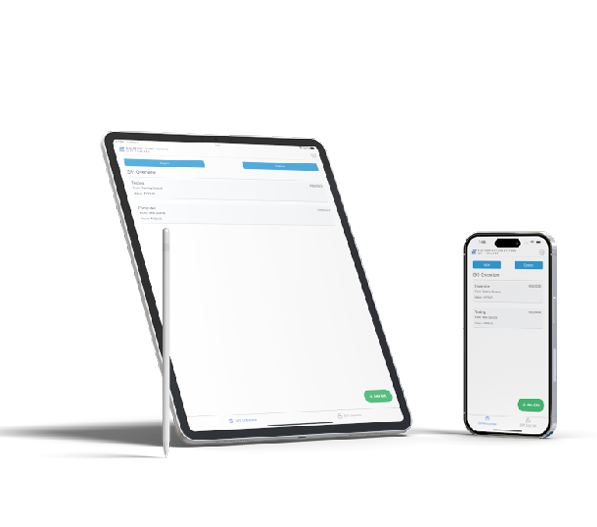
Modern Campaign Finance Reporting for California Agencies
Under the Political Reform Act, candidates and committees disclose the money they raise and spend on recurring statements filed with their city or county filing officer. For local election offices and clerks, that means processing waves of filings on semi-annual and pre-election deadlines — and 24-hour reports in the final 90 days before every election.
eFile gives filers a full-featured campaign accounting system that supports all transaction types, generates each disclosure form from the same books, and files it electronically with your agency. Filing officers review and publish filings from one portal, and the public searches them instantly — no more scanning stacks of paper on deadline day.
The California Campaign Disclosure Forms, at a Glance
| Form | What It Is | Who Files |
|---|---|---|
| Form 501 | Candidate Intention Statement | Candidates for state or local office, before soliciting or receiving contributions |
| Form 410 | Statement of Organization | Committees, within 10 days of qualifying — the original goes to the Secretary of State; the local copy is filed electronically in eFile |
| Form 409 | LLC Statement of Members | LLCs that qualify as committees or committee sponsors |
| Form 460 | Recipient Committee Campaign Statement — itemized contributions and expenditures | Candidates and committees that raise or spend $2,000 or more in a calendar year, on semi-annual and pre-election schedules |
| Form 450 | Recipient Committee Campaign Statement — Short Form | Recipient committees that meet the short-form conditions for the reporting period |
| Form 425 | Semi-Annual Statement of No Activity | Recipient committees with no contributions or expenditures during the six-month period |
| Form 470 | Officeholder/Candidate Campaign Statement — Short Form | Candidates and officeholders who raise and spend less than $2,000 and have no controlled committee |
| Form 461 | Independent Expenditure Committee and Major Donor Committee Campaign Statement | Major donors contributing $10,000 or more, or persons making independent expenditures of $1,000 or more, in a calendar year |
| Form 462 | Verification of Independent Expenditures | Committees and individuals making independent expenditures, verifying non-coordination |
| Form 496 | 24-Hour/10-Day Independent Expenditure Report | Committees making independent expenditures of $1,000 or more in the 90 days before an election |
| Form 497 | 24-Hour/10-Day Contribution Report | Committees receiving or making contributions of $1,000 or more in the 90 days before an election |
| Form 463 | Report of Security Expenses | Candidates and officeholders reporting campaign funds spent on security expenses |
| Form 511 | Paid Spokesperson Report | Committees spending $5,000 or more on an individual's paid appearance in political advertisements |
| Form 507 | Business Entity: Advocacy & Advertisements Statement of Online Activity | Qualifying for-profit business entities engaging in online political advertising activity |
| Form E-530 | Communications Identifying State Candidates | Persons spending $50,000 or more on communications identifying state candidates within 45 days of an election |
| Form 400 | Slate Mailer Organization — Statement of Organization | Slate mailer organizations, within 10 days of receiving $500 or more to produce slate mailers |
| Form 401 | Slate Mailer Organization — Campaign Statement | Slate mailer organizations, disclosing payments received and made |
| Form 402 | Slate Mailer Organization — Statement of Termination | Slate mailer organizations terminating the organization |
| Form 498 | Slate Mailer Late Payment Report | Slate mailer organizations receiving late payments |

How eFile helps
Comprehensive and compliant, from Form 501 to election night.
- Certified by the California Secretary of State for electronic filing.
- Full-featured campaign accounting for all transaction types.
- Import and export of campaign finance transactions and contributor/payee information in Excel and CSV.
- Electronic filing of all FPPC campaign disclosure forms, including 410, 425, 450, 460, 461, 470, 496, 497, and 501.
- Free 1:1 or group training for candidates and treasurers; unlimited training for filing officers and admins.
- Support for the legacy CAL format and the upcoming CARS data exchange format.
- Auto-redaction on electronic filings; built-in redaction for uploaded filings.
- Public search portal with subscriptions, bulk exports, and an open-access data API.
- API integration for third-party campaign software vendors.
Certified by the Secretary of State — and Ready for CARS from Day One
eFile is certified by the California Secretary of State for electronic filing of campaign disclosures. And with the Secretary of State replacing Cal-Access with the Cal-Access Replacement System (CARS) — a new statewide data exchange format for campaign finance and lobbying disclosures — eFile is part of the Secretary of State's third-party vendor team helping develop CARS. Agencies on eFile will support the new standard from day one, while legacy CAL-format filings continue to work throughout the transition.
Free 1:1 or Group Training for Candidates and Treasurers
Campaign filers aren't compliance professionals — most candidates and treasurers face these forms for the first time under deadline pressure. That's why eFile includes free 1:1 or group training for campaign filers: a real person walks each candidate or treasurer through their committee setup, transactions, and first filings. Filing officers field fewer panicked phone calls, filings come in cleaner, and electronic filing stays easy for the people actually doing it. Filing officers and agency admins get unlimited training, too — as much as your team needs, whenever staff changes or election season ramps up.
Switching from a Legacy Vendor? Your Data Comes With You.
Most agencies transition to eFile from a legacy platform such as NetFile or Granicus, and we have deep experience with those migrations. Committees, filing histories, and years of campaign disclosure records all come across — so the public record stays complete and searchable from day one, and past filings remain available right alongside new electronic ones.
Migrations are planned around your election and filing calendar so committees never miss a deadline, and they're backed by unlimited training for filing officers and free 1:1 or group training for candidates and treasurers.
Open Data: Public Search, Bulk Exports, and APIs
Disclosure only creates transparency if people can actually use the data. eFile's public portal goes far beyond browsing PDFs: it offers detailed searches including transaction and aggregate transaction searches, committee finance statistics, and full-text searchable independent expenditures and late contributions — the filings journalists and researchers care about most in the final weeks before an election. Anyone can sign up for alerts — scoped to a search string, so the notification only fires for the committees, candidates, or measures they follow — and be notified the moment matching filings are posted.
For deeper analysis, eFile provides a public campaign disclosure data API and public bulk exports, so newsrooms, watchdogs, and researchers can work with the raw data directly. And for committees that keep their books elsewhere, eFile includes API integration for third-party campaign software vendors, so filings can be submitted electronically straight from the vendor's system.
Frequently Asked Questions
Which campaign disclosure forms can be filed electronically with eFile?
All of them. eFile supports electronic filing of every FPPC campaign disclosure form, including Forms 410, 425, 450, 460, 461, 470, 496, 497, and 501. For the Form 410, the original goes to the Secretary of State and the local copy is filed electronically in eFile, so the local record stays complete.
What is a Form 460 and who files it?
Form 460 is the Recipient Committee Campaign Statement — the detailed report of contributions received and expenditures made. Candidates and committees that raise or spend $2,000 or more in a calendar year file Form 460 on semi-annual and pre-election schedules.
What are Forms 496 and 497?
They are 24-hour reports filed in the 90 days before an election. Form 497 reports contributions of $1,000 or more received from (or made to) a single source, and Form 496 reports independent expenditures of $1,000 or more. Both must be filed within 24 hours, which makes electronic filing essential.
What is CARS and is eFile ready for it?
CARS is the Cal-Access Replacement System, the Secretary of State's next-generation campaign finance and lobbying data system with a new data exchange format replacing the legacy CAL format. eFile is part of the Secretary of State's third-party vendor team helping develop CARS and will support the new standard from day one, while continuing to support the legacy CAL format.
Is training available for candidates and treasurers?
Yes — and it's free. eFile includes free 1:1 or group training for campaign filers: a real person walks each candidate or treasurer through committee setup, transactions, and their first filings, so electronic filing stays easy for first-time filers. Filing officers and agency admins receive unlimited training as well.
Can the public search campaign finance filings in eFile?
Yes. eFile's public portal offers detailed searches — including transaction and aggregate transaction searches, committee finance statistics, and full-text searchable independent expenditures and late contributions — plus in-line PDF display, new-filing subscriptions, public bulk exports, and a public campaign disclosure data API.